

18udit2007@gmail.comsilverstonehaldwani@gmail.comEdit Profile
Clothes are such a normal part of our daily lives that we rarely stop to think about why we actually need them. We wake up, choose an outfit, get dressed, and continue with our day. But clothing is much more than something we wear for appearance.
For thousands of years, humans have used clothing to protect their bodies, adapt to different environments, express their identity, and become part of their communities. From a simple cotton T-shirt to a firefighter’s protective suit, every type of clothing can serve a purpose.
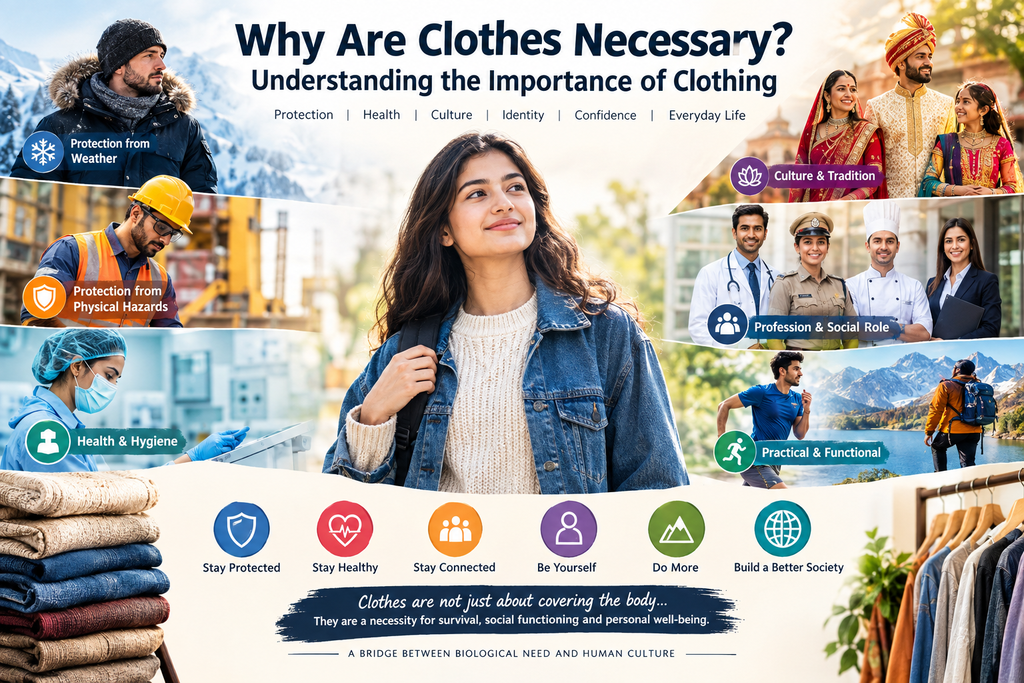
So, why are clothes necessary? Let’s explore the physical, social, psychological, and practical importance of clothing in human life.
1. Clothes Protect Us From the Weather
One of the most basic reasons we wear clothes is protection from the environment.
Winter clothes such as jackets, sweaters, and coats help keep the body warm. Lightweight and breathable clothes can make hot weather more comfortable, while raincoats protect us from rain. Hats, caps, and long-sleeved clothing can also provide protection from direct sunlight.
Without suitable clothing, extreme cold, heat, rain, or prolonged exposure to sunlight can make everyday activities difficult and, in severe conditions, can become dangerous.
2. Clothes Protect the Body From Physical Hazards
Clothing can act as a protective layer between our skin and the outside world.
When people work or participate in activities where injuries are possible, appropriate clothing can provide additional protection. Construction workers may wear protective clothing, gloves, helmets, and safety footwear. Cyclists may wear protective gear, while athletes often use clothing designed specifically for their sport.
Clothing can also provide some protection against:
- Insect bites
- Scratches and abrasions
- Dust and dirt
- Minor environmental hazards
- Certain workplace hazards
Specialized protective clothing becomes particularly important in occupations where workers are regularly exposed to physical risks.
3. Clothes Support Health and Hygiene
Clothing also has an important relationship with health and personal hygiene.
Clean clothing provides a barrier between our skin and environmental dirt, dust, and other contaminants. Choosing appropriate fabrics and changing clothes regularly can also help people stay comfortable and maintain personal hygiene.
In certain environments, clothing has an even more specific health-related purpose. Medical professionals, for example, may use gowns, gloves, masks, and other protective equipment to reduce exposure to contaminants and help maintain a hygienic environment.
However, clothing alone does not prevent infections. Good hygiene practices such as regular bathing, hand washing, and washing clothes are also important.
4. Clothes Represent Culture and Tradition
Clothing isn’t only about physical protection. It is also deeply connected to culture and tradition.
Different communities have developed their own styles of clothing over generations. In India, for example, people wear a wide variety of traditional clothing such as sarees, kurta-pajamas, sherwanis, leheng
- Clothes Reflect Social Identity and Status
Clothing often communicates something about a person before they even speak. A uniform can indicate a person’s profession, such as a doctor, police officer, pilot, or student. Formal wear can signal a professional or important occasion, while casual wear might suggest a relaxed setting.
Clothing can also reflect social norms around modesty and appropriateness, which vary widely between cultures and communities. What is considered acceptable in one society may be viewed differently in another. In many workplaces and institutions, dress codes exist specifically to maintain a certain standard of presentation or professionalism.
- Clothes Influence Confidence and Mood
Beyond the physical and social aspects, clothing also has a psychological impact. Many people feel more confident when they are dressed in a way that suits the occasion. Choosing an outfit for a job interview, a special event, or even just a regular day can affect a person’s mindset and how they carry themselves.
This connection between clothing and confidence is well recognized — the way we dress can influence our mood, our self-perception, and how we’re perceived by others in return.
- Clothes Make Different Activities Possible
Different tasks and activities often require specific types of clothing to be carried out safely and effectively. Swimwear is designed for water activities, hiking gear is built to handle rough terrain, and sports uniforms are designed for movement and performance. Without the right clothing, many everyday and specialized activities would be far more difficult or even unsafe.
Conclusion
Clothes are far more than pieces of fabric we put on each morning. They protect us from the weather and physical hazards, support hygiene, preserve culture, indicate social identity, boost confidence, and make countless daily activities possible. Understanding why clothes are necessary helps us appreciate something we often take for granted — a simple, everyday choice that quietly shapes so much of human life.
You also read this blog also-
Best Royal Indian Clothing for Men Who Love Traditional and Elegant Fashion.